
Real positions, in 3D
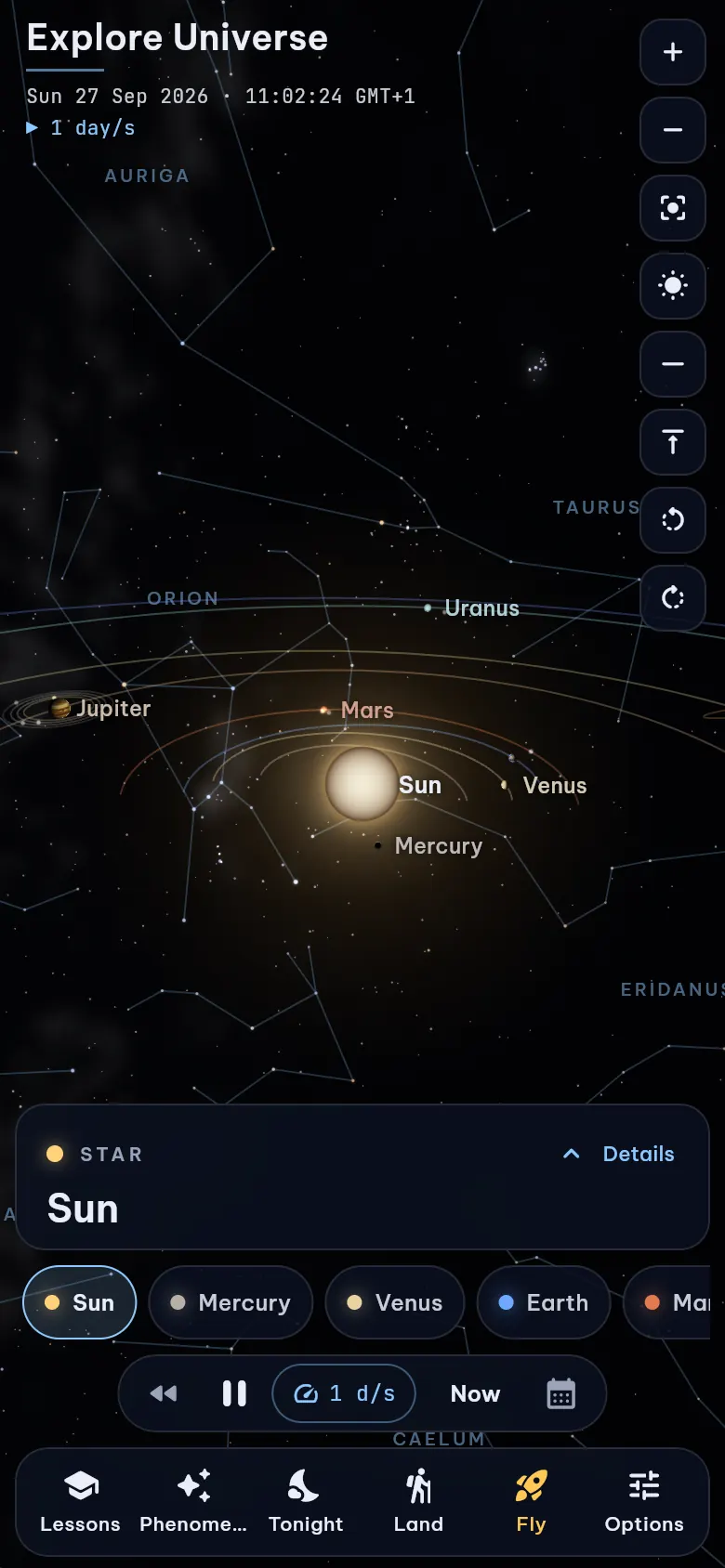
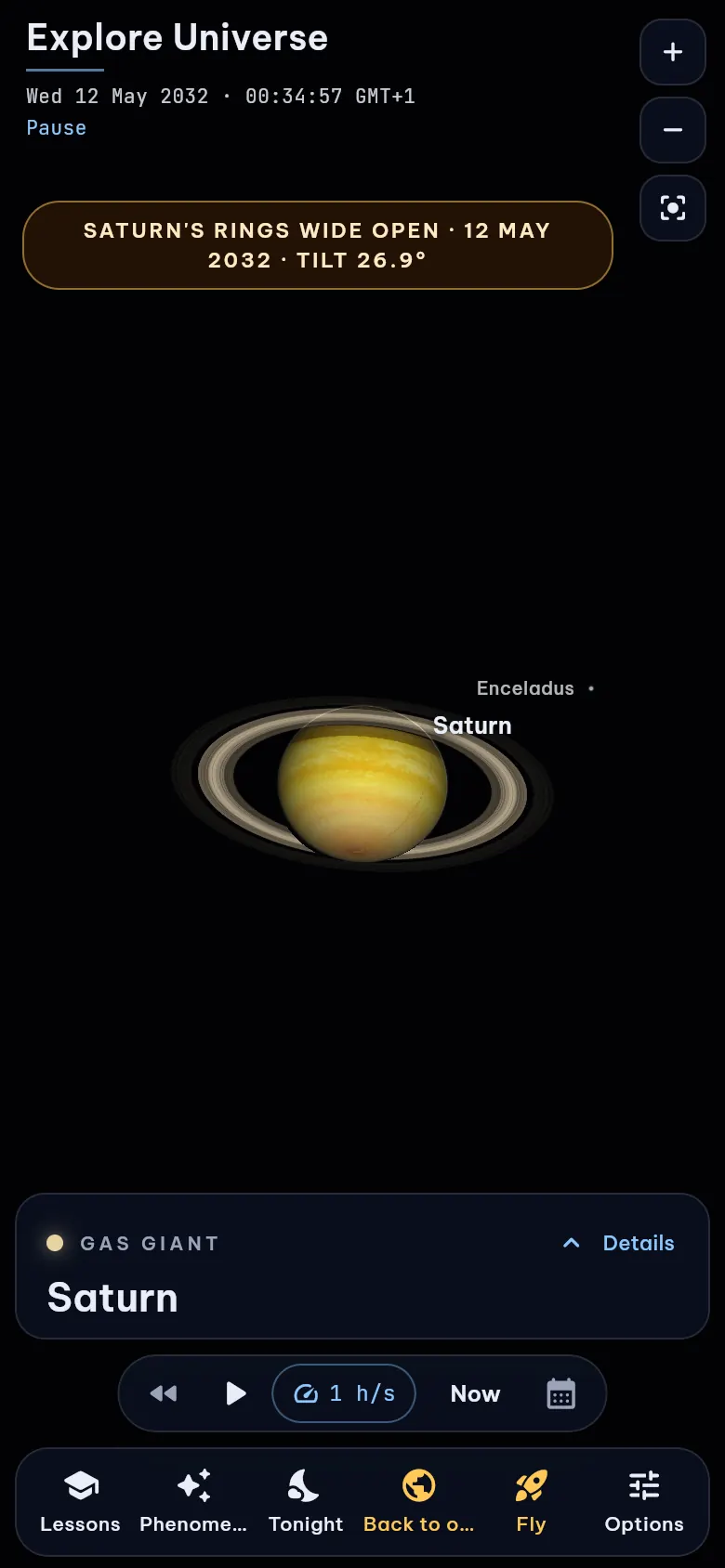
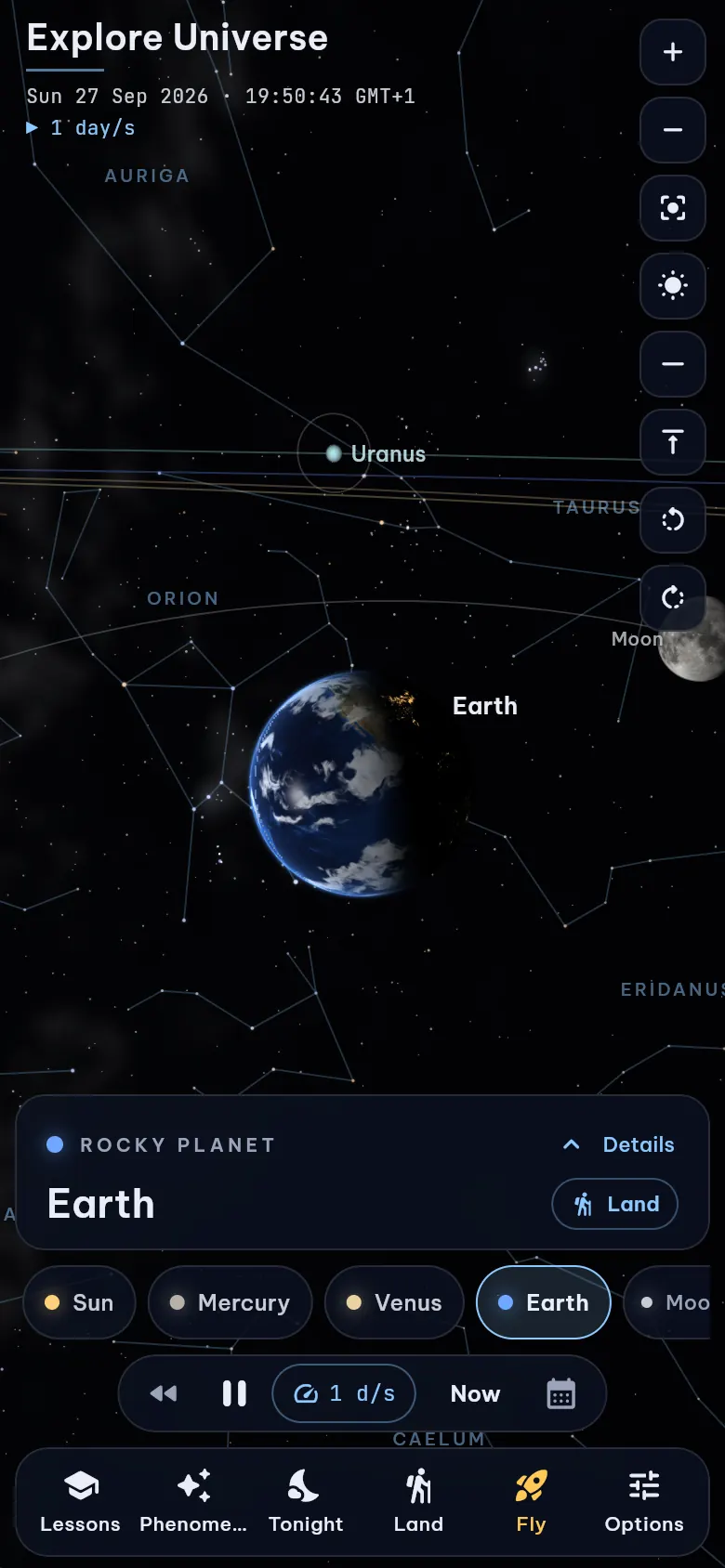
The Sun, eight planets and eleven moons at their true places for any date from 1600 to 3000, with 5,044 stars, all 88 constellations and the Milky Way.
Solar System observatory · Spaceflight simulator
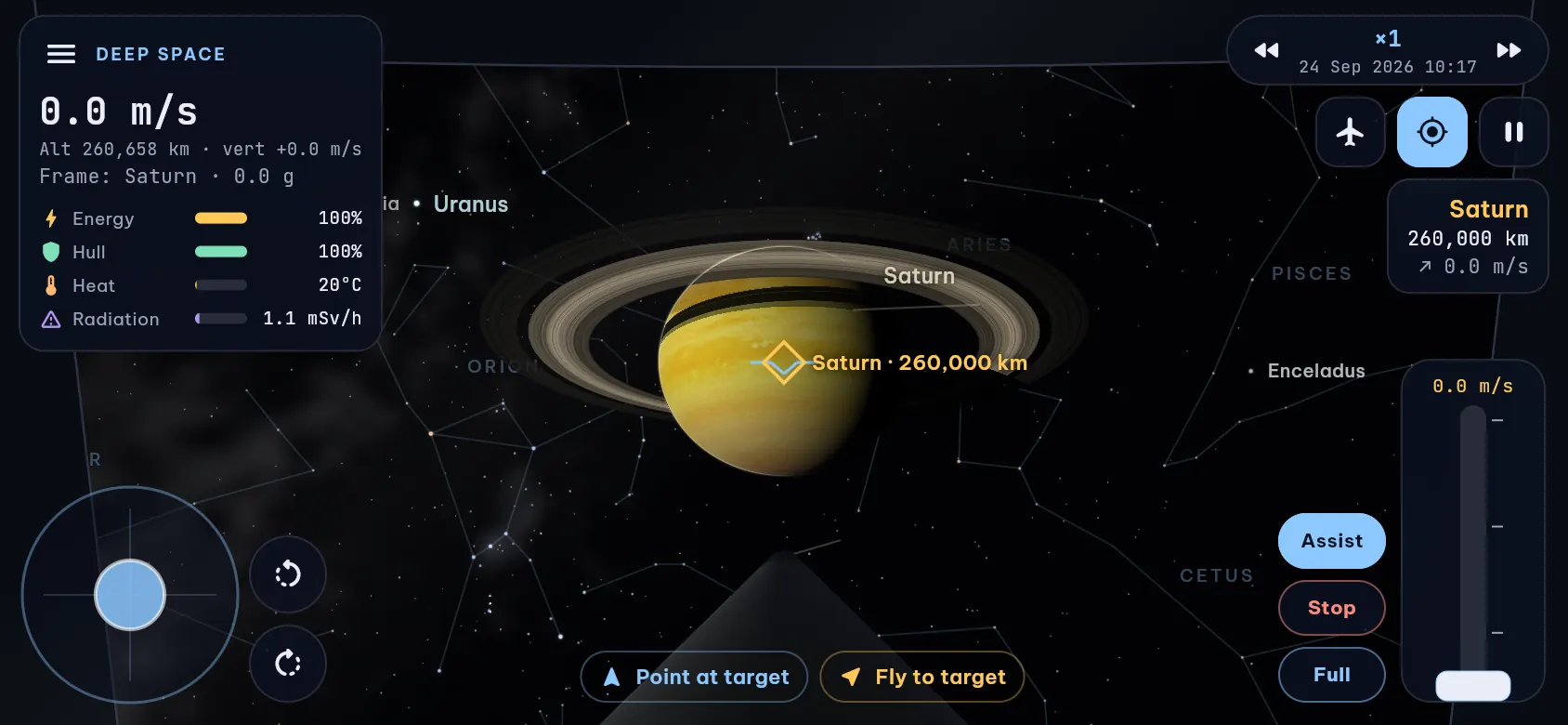
See every planet and moon where it really is right now, catch the next eclipse, check tonight's sky over your city, then take off from a real launch pad and fly all the way to Saturn.
The observatory
Explore Universe computes the Solar System from published astronomical models and checks itself against independent ephemerides, so what you see matches the sky outside.
The Sun, eight planets and eleven moons at their true places for any date from 1600 to 3000, with 5,044 stars, all 88 constellations and the Milky Way.
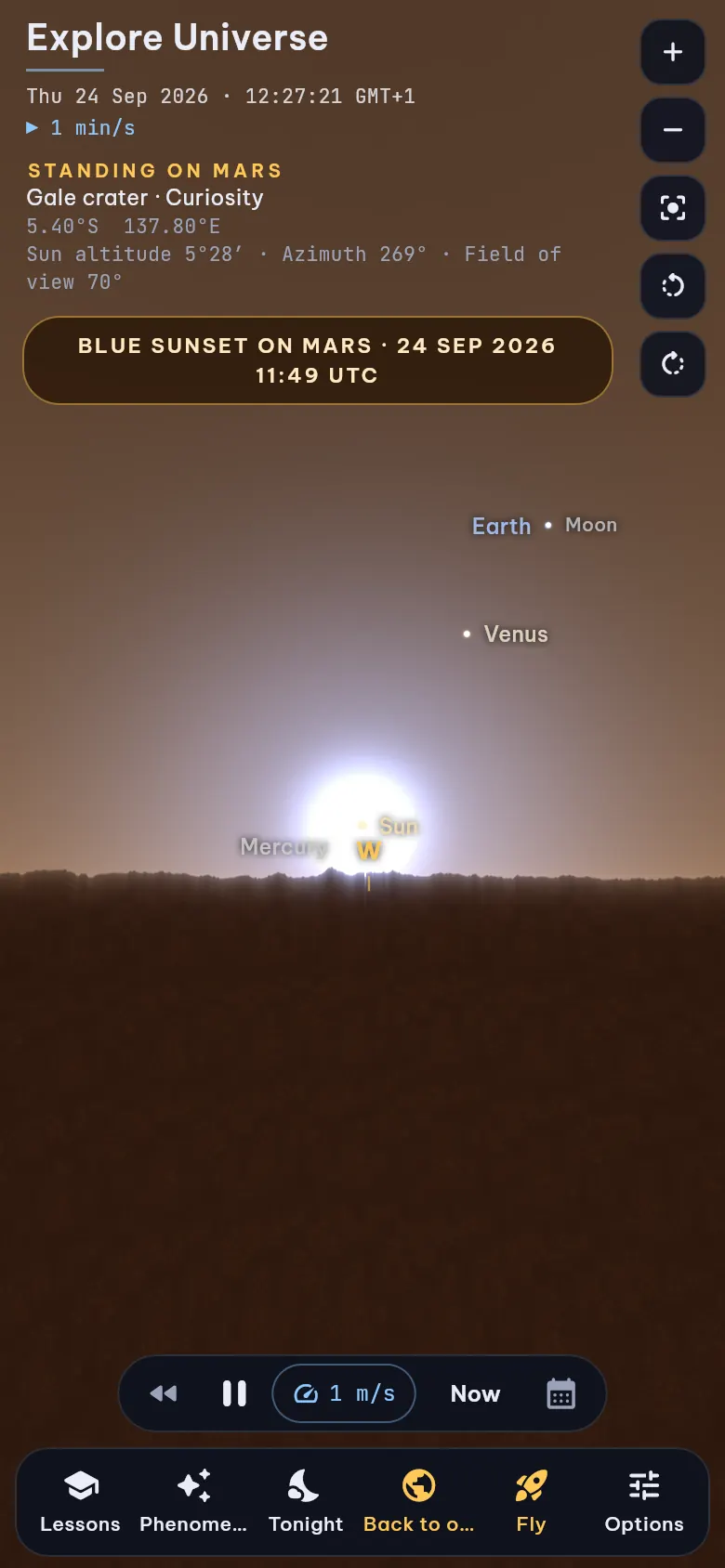
Watch a blue sunset on Mars, Jupiter filling the sky of Europa or Earth hanging over the Moon, each with its own atmosphere and light.
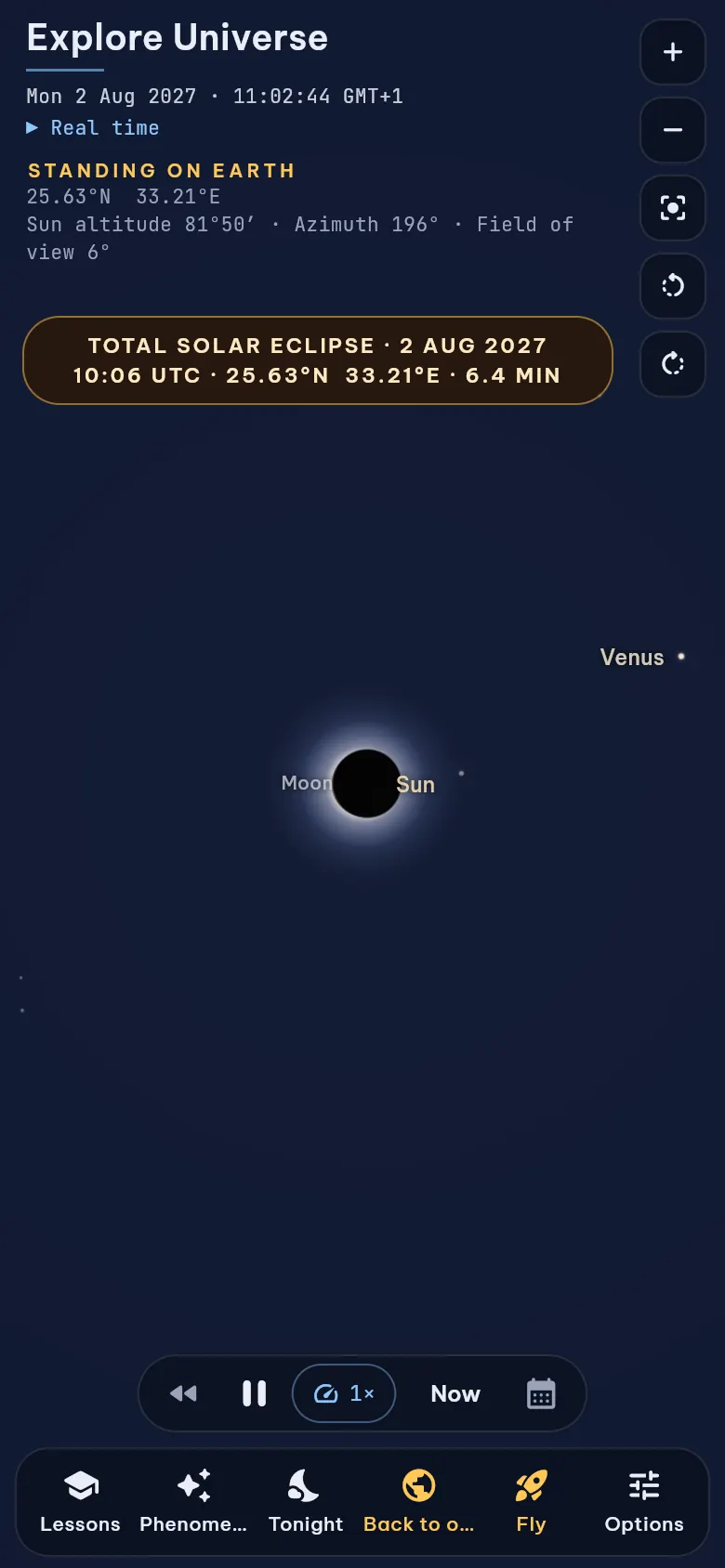
The next total solar eclipse, lunar eclipse or transit is located automatically and staged from the best place to see it.
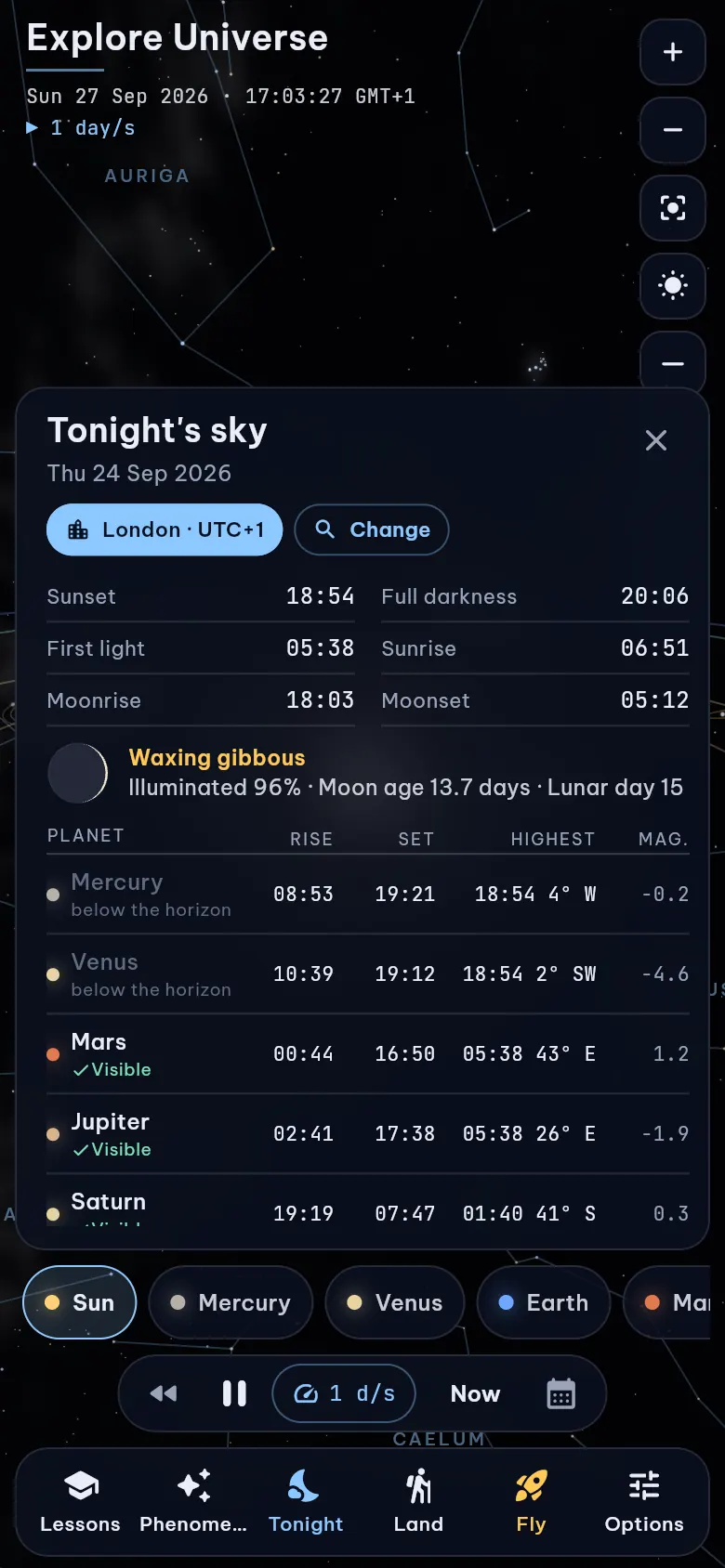
Sunset, full darkness, Moon phase and which planets you can see tonight, in local time for 72 cities, plus the eclipses and meteor showers coming up.
Day and night, Moon phases, eclipses, seasons, Kepler's laws, retrograde motion and the scale of space, each staged step by step for grades 6–10.
English, Español, Français, Deutsch, Português, Русский, 中文, 日本語, 한국어, हिन्दी, বাংলা, العربية, اردو, Bahasa Indonesia and Tiếng Việt.
Screenshots
Drag to orbit, pinch to zoom, tap any world to fly there. Portrait or landscape.
Spaceflight
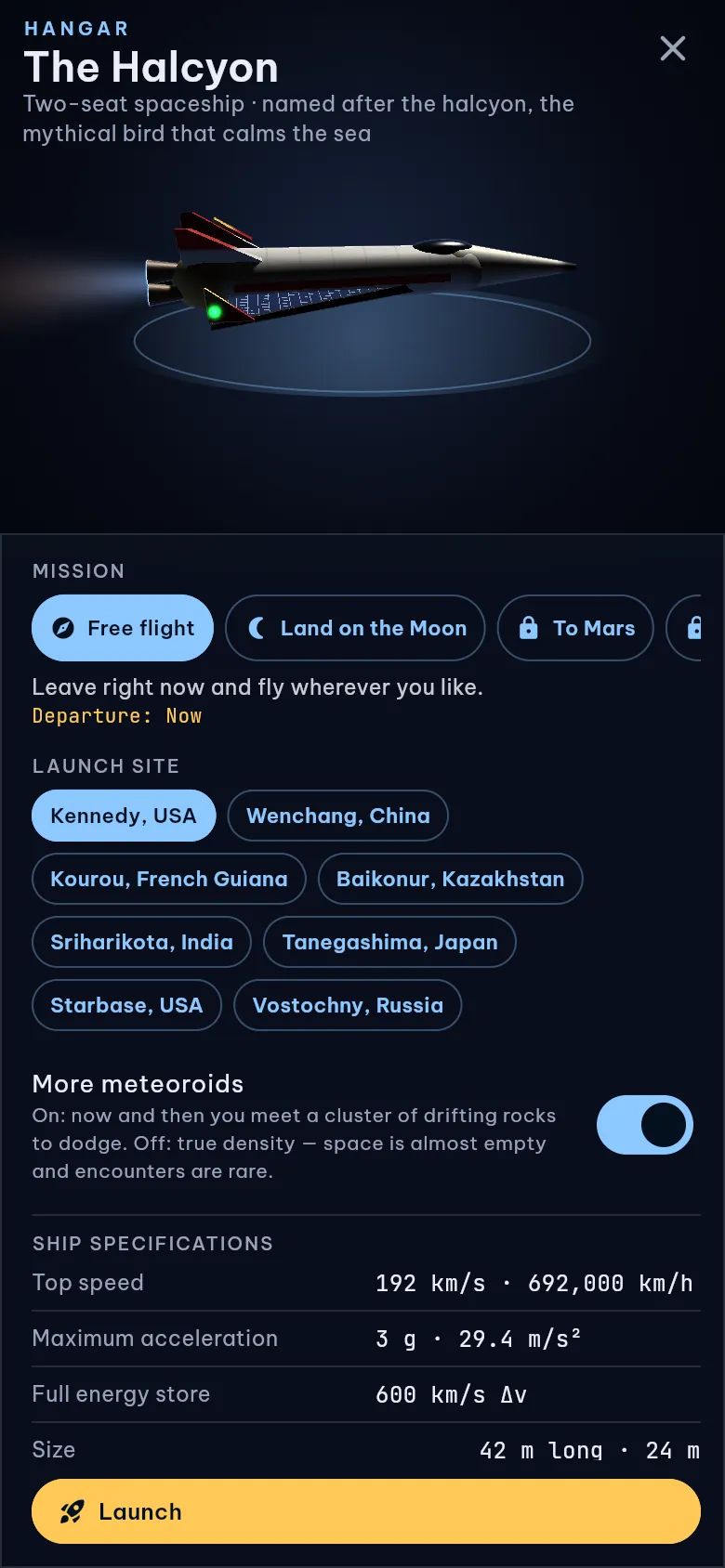
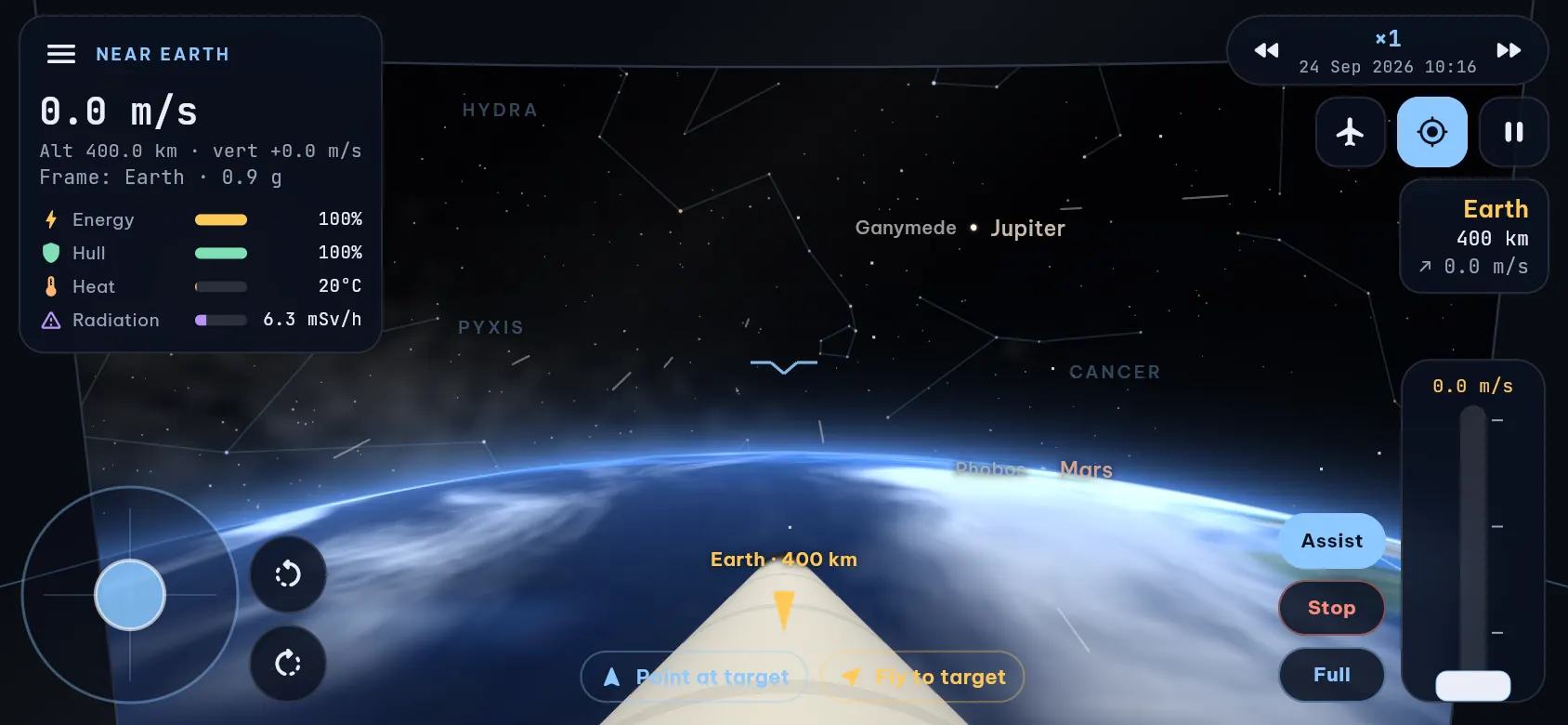
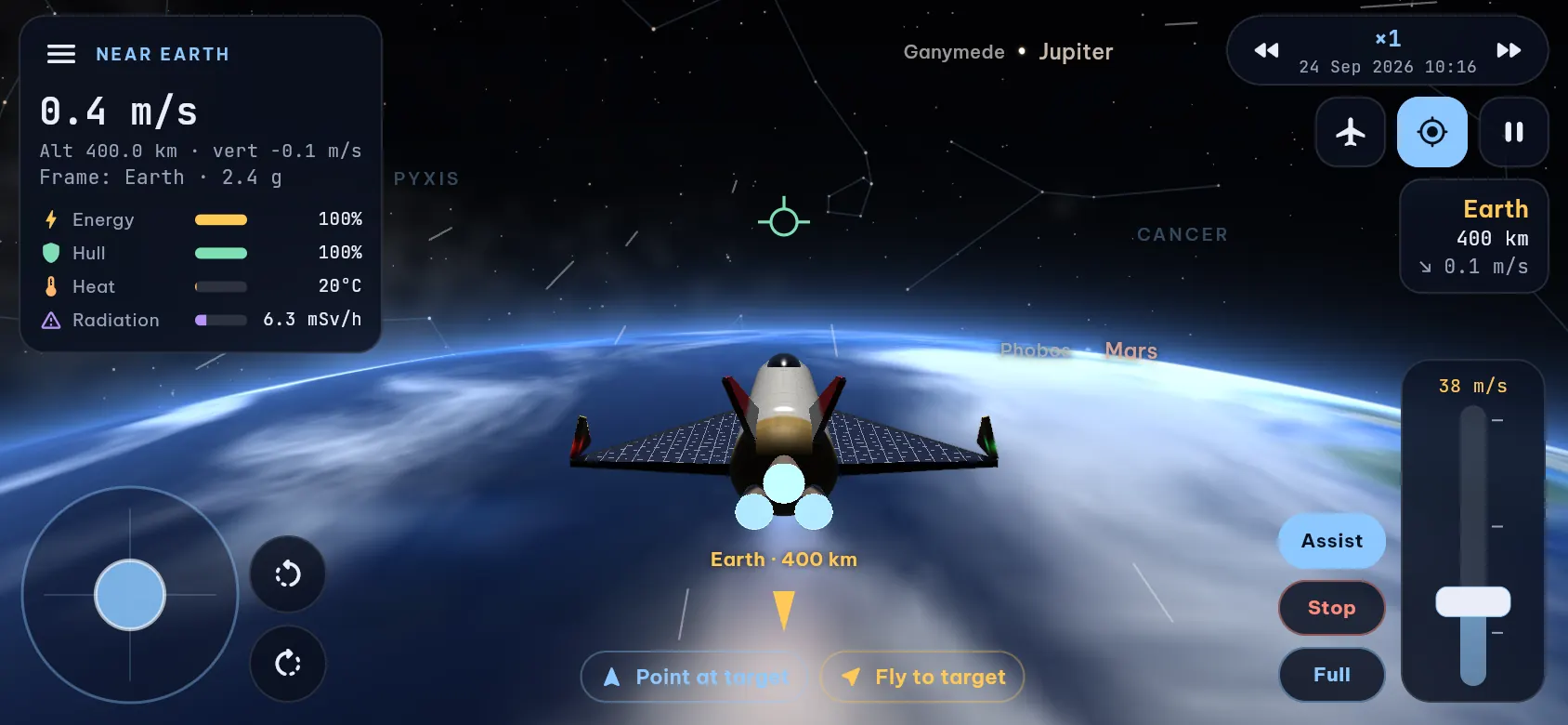
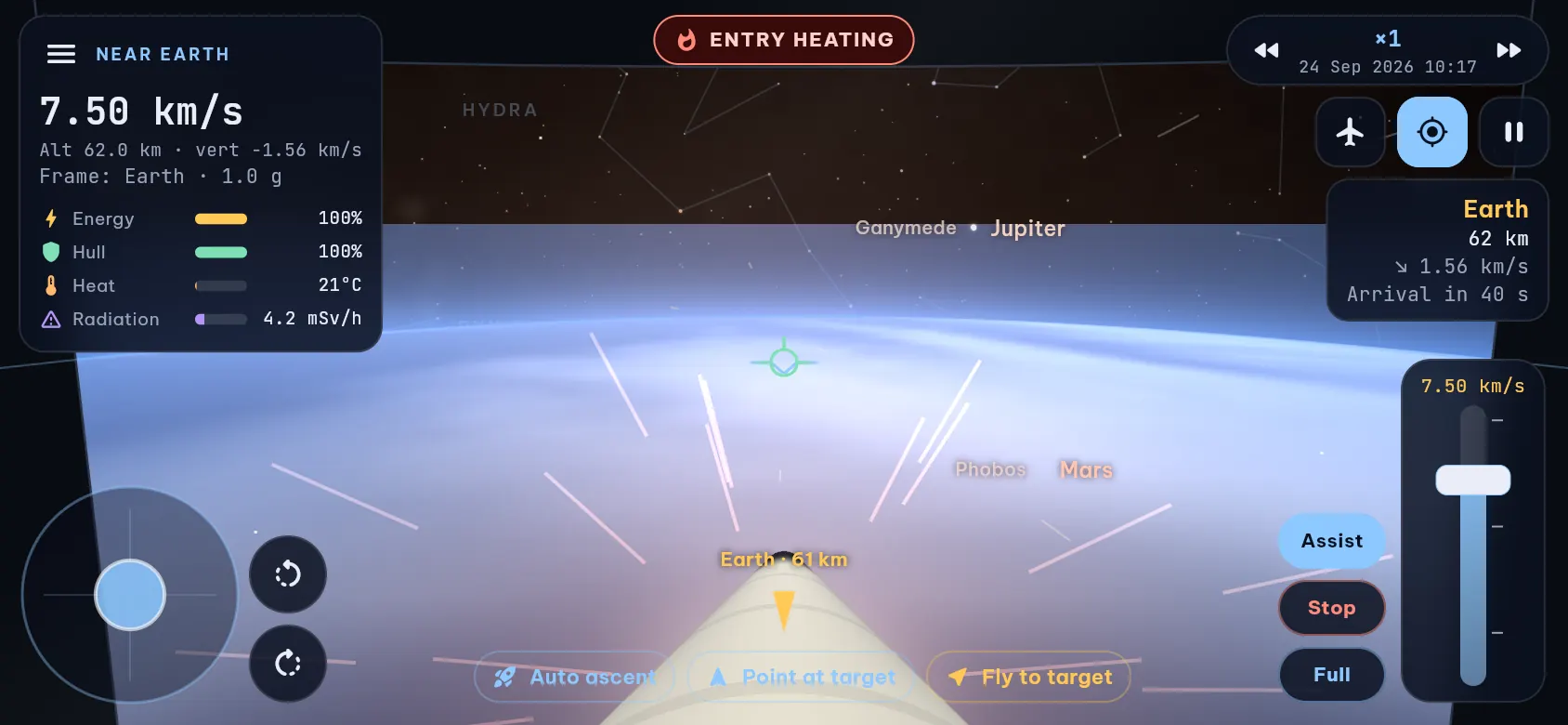
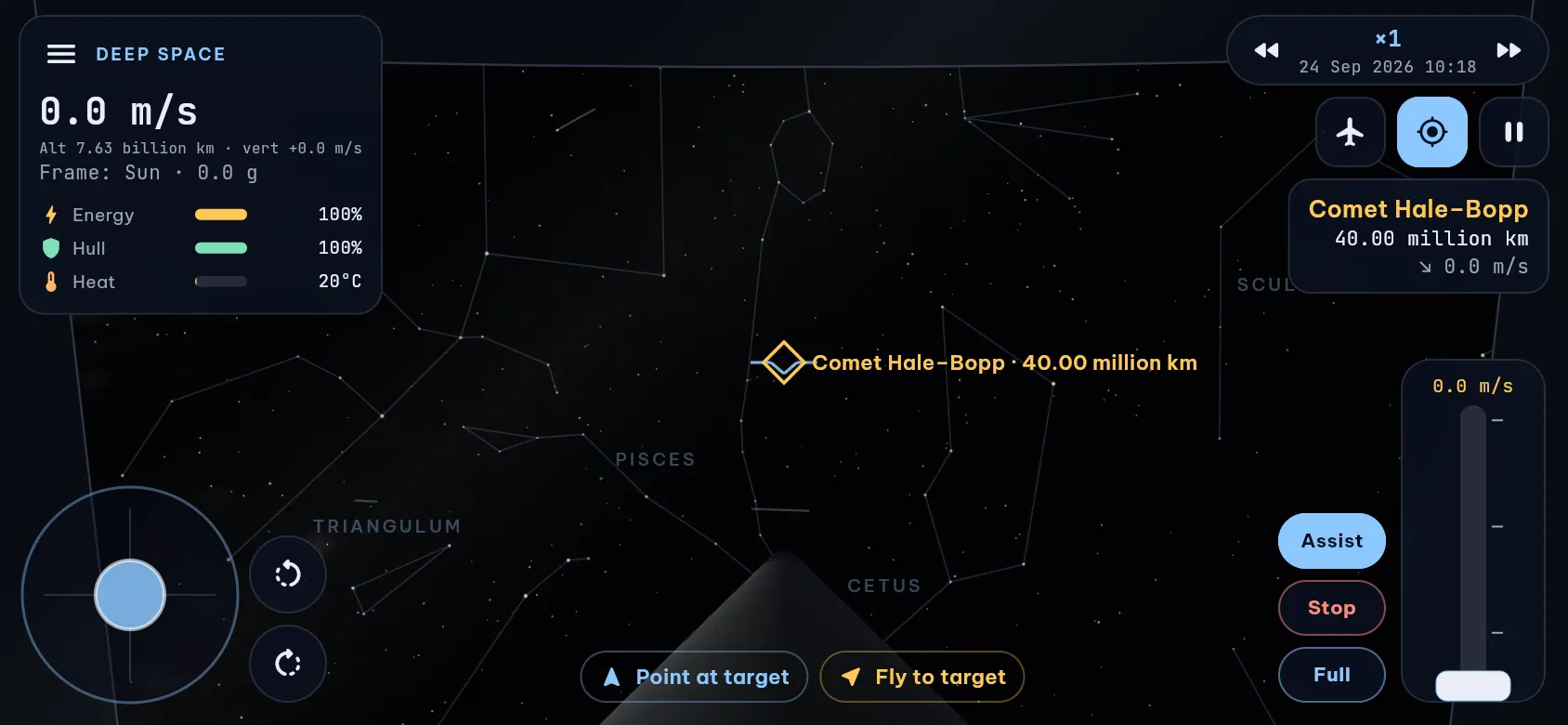
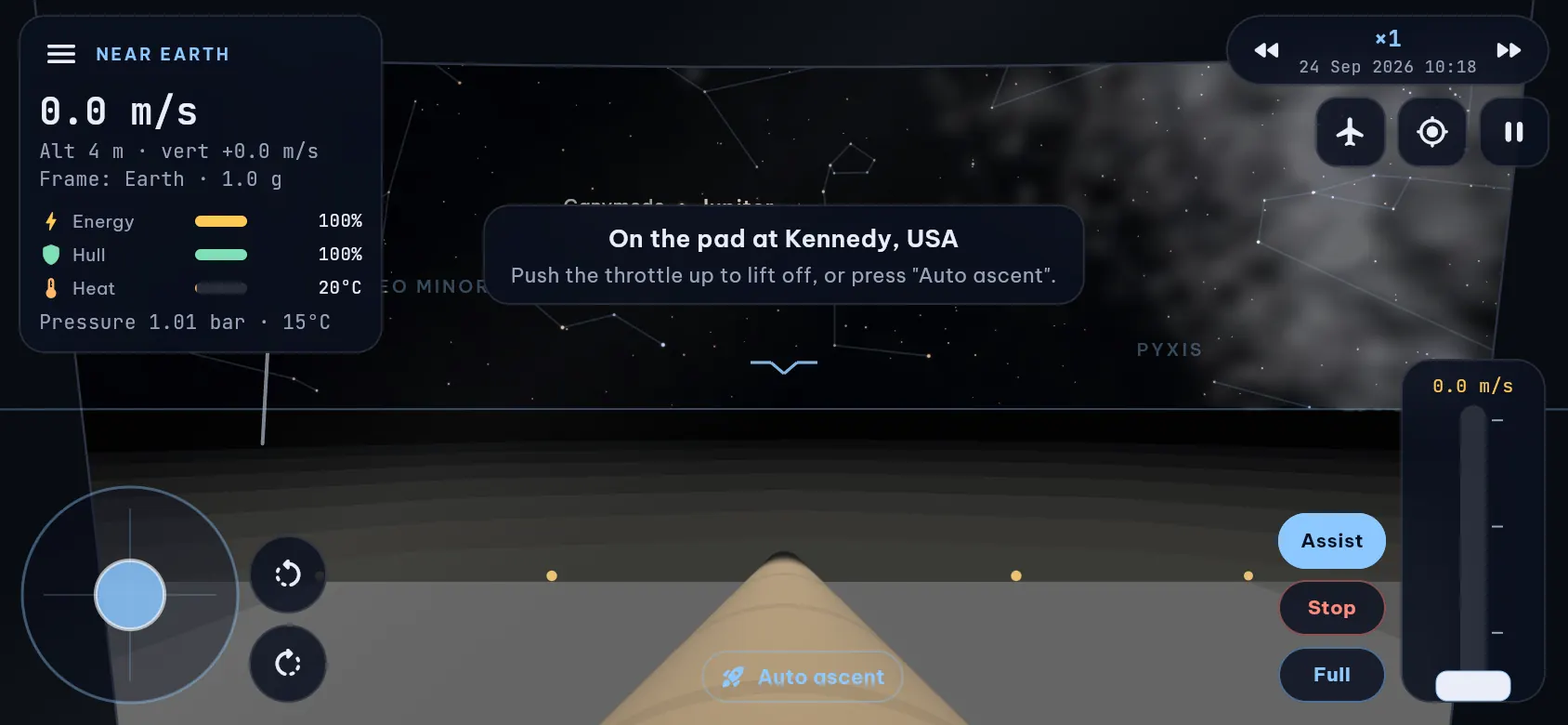
Start on a real launch pad — Kennedy, Kourou, Baikonur, Tanegashima and more — at the real time of day. Steer from the cockpit or the chase view, set your speed, and watch your energy. Gravity, orbits and atmospheres are simulated, and so are the dangers.
Download
One app, the same sky everywhere. Your progress and settings stay on your device.
Smooth 3D on iOS with portrait and landscape layouts. Free download, one optional purchase.
Download on the App StorePhones and tablets, with a low-power mode for older devices. Free download, one optional purchase.
Get it on Google Play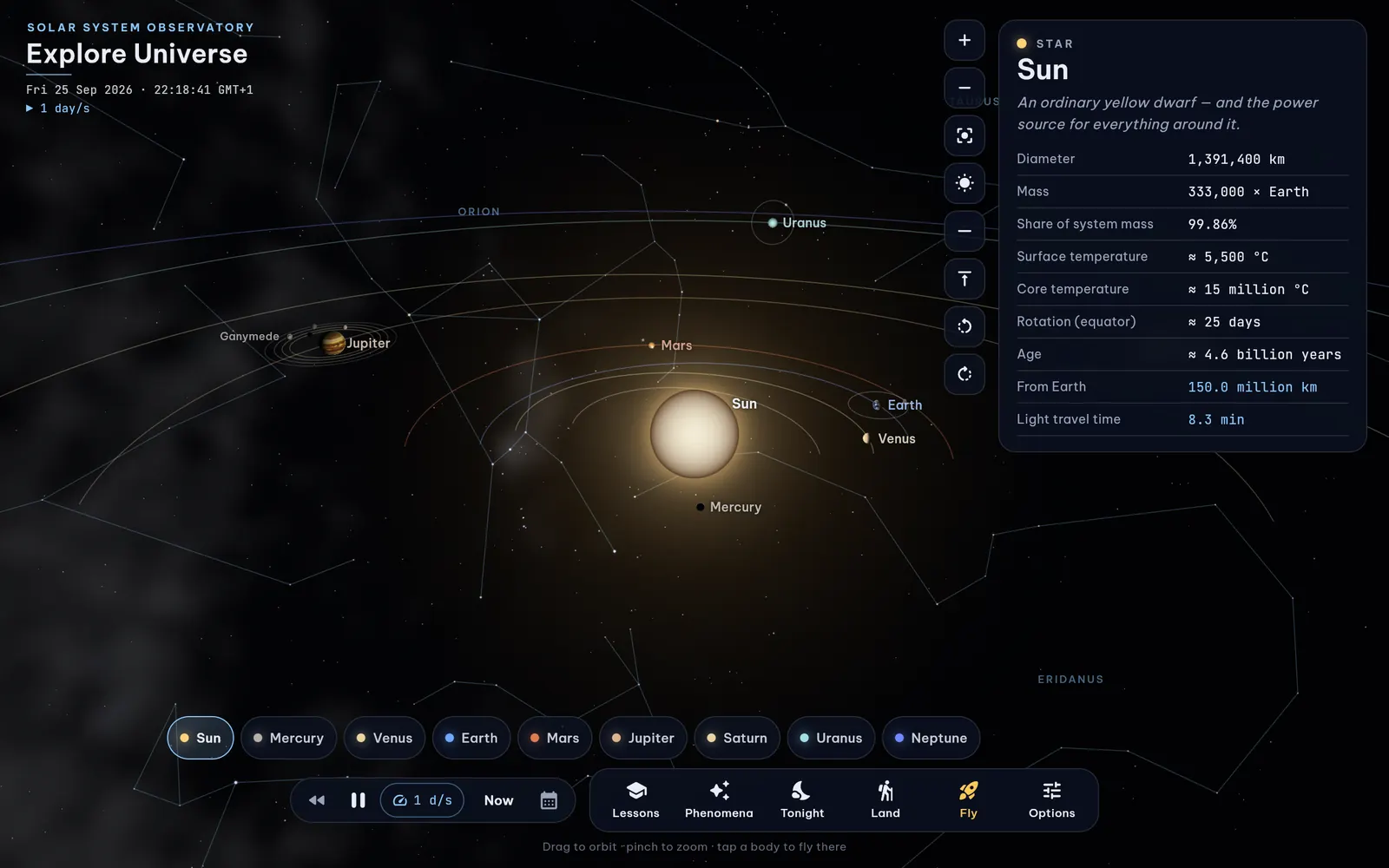
Runs in any modern browser on a laptop or classroom screen — nothing to install.
Open the web appPricing
$0
$2.99 one time, local prices vary
FAQ
Yes. The whole observatory, all lessons and two flight missions are free. A single one-time purchase (2.99 USD, or the local equivalent) unlocks the ten other flight missions and everything added later. There are no ads and no subscription.
Yes. Positions come from JPL orbital elements and a lunar theory from Jean Meeus, checked in automated tests against independent ephemerides: under 0.02° for the inner planets and under 60 arcseconds for the Moon between 1900 and 2045.
Up to 192 km/s (about 692,000 km/h), the record set by NASA's Parker Solar Probe on 24 December 2024, the fastest object ever built. Everything except the drive uses materials flown today.
No. There is no account, no ads, no analytics and no location permission. Settings stay on your device, and purchases are handled by Apple or Google. Read the privacy policy.
iPhone and iPad, Android phones and tablets, and any modern web browser. The interface is available in 15 languages, including English, Spanish, French, German, Portuguese, Russian, Chinese, Japanese, Korean, Hindi, Arabic and Indonesian.
Yes. Eight lessons cover the Solar System, day and night, Moon phases, eclipses, seasons, Kepler's laws, retrograde motion and cosmic distances, each with a quiz, for students in grades 6–10.